Design
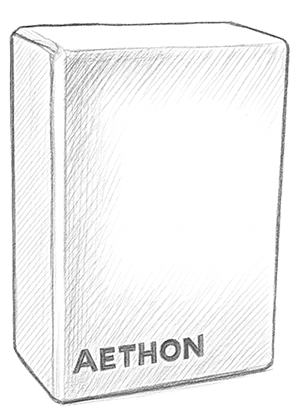
The AETHON Air Quality Monitor (piAQM) is offered in a standard compact designs ready to be carried on anywhere and anytime. The design can be also customized by 3D-printing or crafting.
Carry-on Design
Portable 10 × 8 × 3.5 cm³, ideal for mobile monitoring and personal exposure assessment.
Operation and Data Transfer
The AETHON piAQM features easy and simple setup procedures, long-term stability, durability, and precision.
It is powered with a USB type-C plug and features low power consumption.
It is easily configured via Bluetooth to be connected to a WiFi to upload data seamlessly and continuously to the AETHON Dashboard storage with 1-minute time resolution.
AETHON Dashboard – Visualization
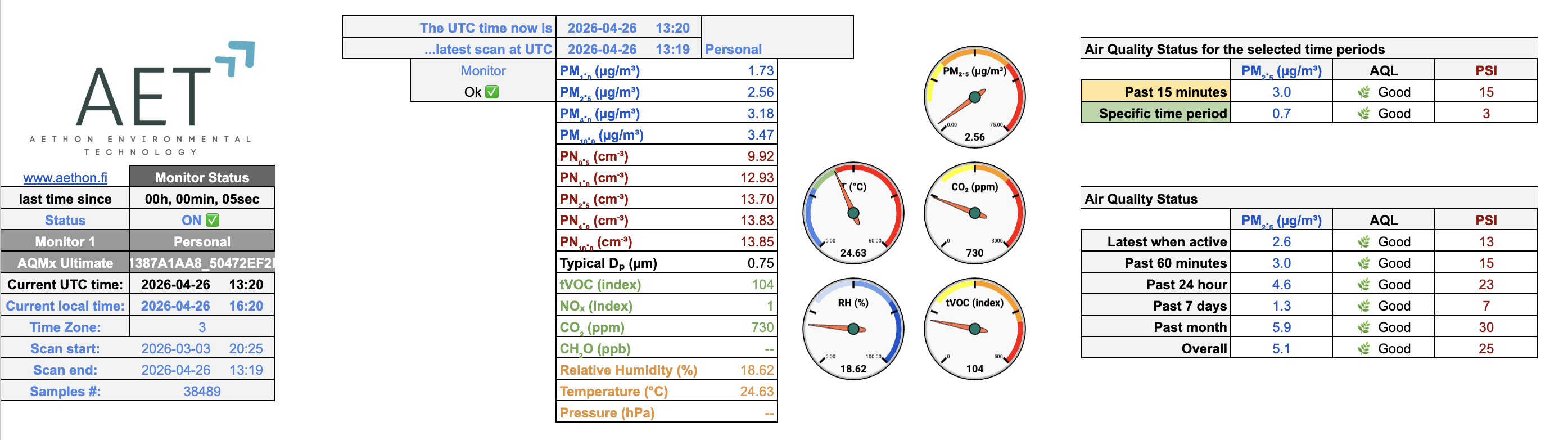
The uploaded data on the cloud is dynamically converted on the AETHON Dashboard, which summarizes and visualizes the exposure levels and particle number size distributions.
The exposure levels summary is presented in several timescales:
instantaneous,
past 60 minutes,
past 24 hours,
past seven days,
past month,
and overall period as simple statistical tables listing average, standard deviation, minimum, median, and maximum for all monitored parameters.
The detailed exposure levels are visualized in plots illustrating the minute-to-minute variation during the different time scales.
The exposure data is instantly converted to Air Quality Index (AQi) based-on the local guidelines.
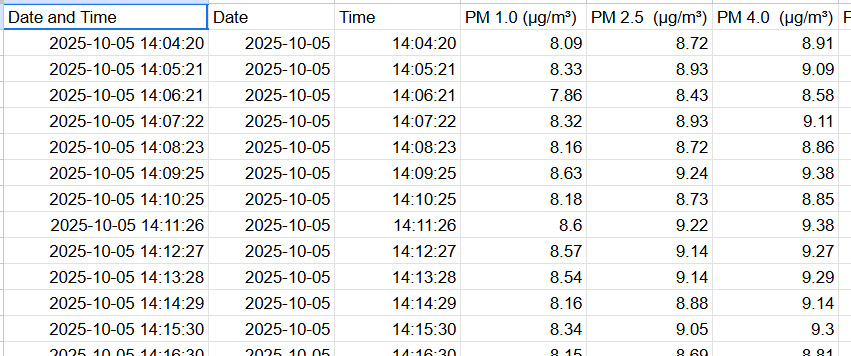
The exposure data can be conveniently downloaded from the AETHON Dashboard and stored locally in a common data format table.
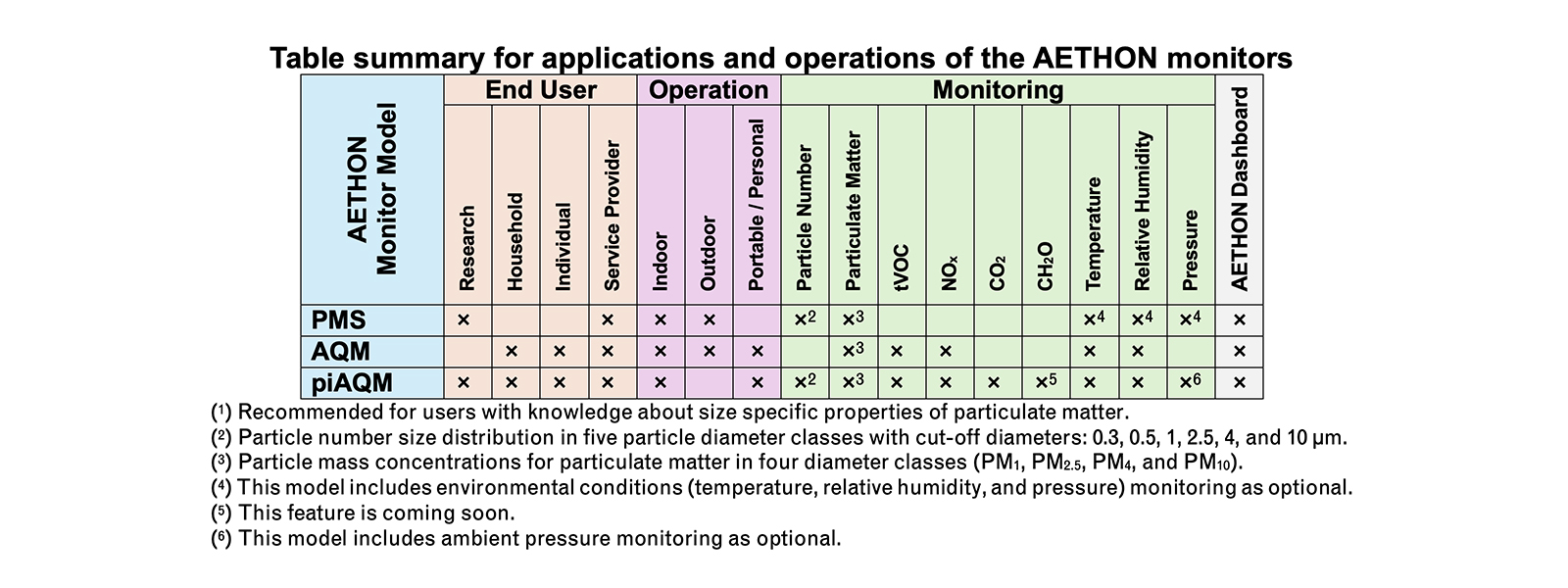
The AETHON Dashboard for the AETHON piAQM monitor ensures minute-to-minute updates for:
1. Exposure levels based on two concentrations metrics (number and mass concentrations)
2. Particle number size distributions (five classes within 0.3 - 10 µm)
3. Exposure levels based on selected gaseous pollutants (NOₓ and CO₂)
4. Concentrations of two important indoor air pollutants components (tVOC and CH₂O)
5. Air quality index based-on the local guidelines for PM₂․₅
6. Environmental conditions for temperature and relative humidity
7. Optional: environmental conditions for ambient pressure
Accuracy and Precision
BBased-on device-to-device (D2D) verification, particulate matter was calibrated by comparing the AETHON piAQM models to reference instrument (TSI DustTrak™ DRX 8533 with Ambient Mode operation). Devices were evaluated for tVOC and NOₓ using the calibration and test sequence according to the application note SGP40 – Testing Guide. CO₂ accuracy is interpreted as deviation to a high-precision reference with gas mixtures having a ±2% tolerance and is achieved after either forced CO₂ recalibration or initial operation for 2 days including exposure to fresh air.
The AETHON piAQM is accurate and precise to monitor the particulate matter concentrations at normal indoor and outdoor conditions. It is capable of monitoring severe indoor and outdoor conditions such as deteriorated air quality caused by a vast range of indoor human activities (cooking, combustion for heating, smoking, etc.) or typical ambient pollution. It operates accurately in dry and arid conditions (such as Middle Eastern conditions). It is perfect for applications related to personal exposure monitoring.
Technical Specifications
| Dimensions | |
|---|---|
| Desktop design | Cube side length 6.5 cm |
| Carry on design | 10 × 6 × 3.5 cm³ |
| Weight | less than 100 grams |
| The user-customized design can be 3D-printed and crafted. | |
| Sampling and Data | |
|---|---|
| Sampling interval | 1 s (real-time) |
| Data logging interval | 1 minute average upload |
| Self-cleaning | Ensures accurate sampling |
| Data uploaded to AETHON Dashboard | |
| Mass Concentration Specifications | |
|---|---|
| Concentration range | 0 – 1000 µg/m³ |
| Particulate matter diameter ranges |
PM₁ (0.3 – 1.0 µm) PM₂․₅ (0.3 – 2.5 µm) PM₄ (0.3 – 4.0 µm) PM₁₀ (0.3 – 10.0 µm) |
| Precision for PM₁ and PM₂․₅ |
±5% m.v. (less than 100 µg/m³) ±10% m.v. (100 – 1000 µg/m³) |
| Precision for PM₄ and PM₁₀ |
±5% m.v. (less than 100 µg/m³) ±25% m.v. (100 – 1000 µg/m³) |
| Maximum long-term concentrations precision limit drift | ±1.25% m.v./year |
| Number Concentration Specifications | |
|---|---|
| Concentration range | 0 – 3000 #/cm³ |
| Particulate matter diameter ranges |
PN₀․₅ (0.3 – 0.5 µm) PN₁ (0.3 – 1.0 µm) PN₂․₅ (0.3 – 2.5 µm) PN₄ (0.3 – 4.0 µm) PN₁₀ (0.3 – 10.0 µm) |
| Precision for PN₀․₅, PN₁ and PN₂․₅ | ±10% m.v. |
| Precision for PN₄, PN₁₀ | ±25% m.v. |
| Maximum long-term concentrations precision limit drift | ±1.25% m.v./year |
| Gas Sensing Specifications | |
|---|---|
| Total Volatile Organic Compounds (tVOC) | The tVOC is interpreted as an index 1 – 500 points with device-to-device variation is less than ±15 and repeatability is less than ±5 |
| Nitrogen Oxides (NOₓ) |
The NOₓ is interpreted as an index 1 – 500 points with device-to-device variation is less than ±50 and repeatability is less than ±10 |
| Carbon Dioxide (CO₂) | This applies only to AQMx6 model, the CO₂ range 0 – 40,000 ppm with accuracy ±(50 + 2.5% m.v.) ppm for 400 – 1000 ppm; ±(50 + 3% m.v.) ppm for 1000 – 2000 ppm; and ±(40 + 5% m.v.) ppm for 2000 – 5000 ppm |
| Formaldehydes (CH₂O) | This applies only to AQMx8 model, the CH₂O range 0 – 1000 ppb with accuracy ±20 ppb (or ±2.5% m.v.) for 0 – 200 ppb in clean air. Accuracy is affected in a mixture with VOC in the air. |
| Temperature and Relative Humidity Specifications | |
|---|---|
| Temperature (T) | Temperature accuracy ±0.45 °C (@15 – 30 °C and 50% RH) and repeatability ±0.1 °C (@25 °C and 50% RH) |
| Relative Humidity (RH) |
Relative humidity accuracy ±4.5% (@25 °C and 30% – 70% RH) and repeatability ±1 °C (@25 °C and 50% RH) |
| Operation Conditions | |
|---|---|
| Acoustic emission level | max 25 dB(A) @ 20 cm with drift +0.5 dB(A)/year |
| Recommended operation conditions |
Temperature: 10 – 40 °C Relative Humidity: 20% - 80% RH |
| Performance outside recommended range may cause temporary reduction in performance (reversible RH drift, reduced RH, T, gas, PM accuracy) | |
| Absolute operation conditions |
Temperature: -10 – 50 °C Relative Humidity: 0% - 90% RH (non-condensing) |
| Operation outside absolute conditions may lead to permanently reduced sensor performance (gas sensitivity drift) or cause permanent damage to the device |